
Nature protected under § 3: what is protected, and what does it mean?
Updated
§ 3 (Section 3) of the Danish Nature Protection Act is one of the most important provisions when changing land use. It can both stop a project and form part of its objective.
Which habitat types are protected?
Under the Danish Nature Protection Act, the condition of the following must not be altered:
- natural lakes larger than 100 m²
- watercourses designated as protected
- heathland, bogs, fens and similar habitats, salt meadows and coastal marshes, as well as freshwater meadows and biologically defined dry grasslands, where they individually, collectively or together with lakes form a continuous area larger than 2,500 m²
- bogs and fens smaller than 2,500 m² where they are connected to a protected lake or watercourse
The mosaic rule
Small habitats under 2,500 m² are also protected if they adjoin or form part of other protected habitat types, bringing the total area to 2,500 m² or more. This follows from the guidance on § 3.
What is prohibited?
On land covered by § 3, subsections 2 or 3, § 4 generally prohibits spraying, fertilising, conversion, soil cultivation, sowing or planting. However, existing lawful use may continue. Changes require a derogation from the municipality.
Implications for afforestation and lowland projects
According to SGAV (the Danish Agency for Green Transition and Aquatic Environment), land receiving an afforestation grant must not be nature protected under § 3. Areas protected under § 3 may be included in lowland projects, but changes to their condition require permission. It is therefore important to establish their status early.
Maps and reality
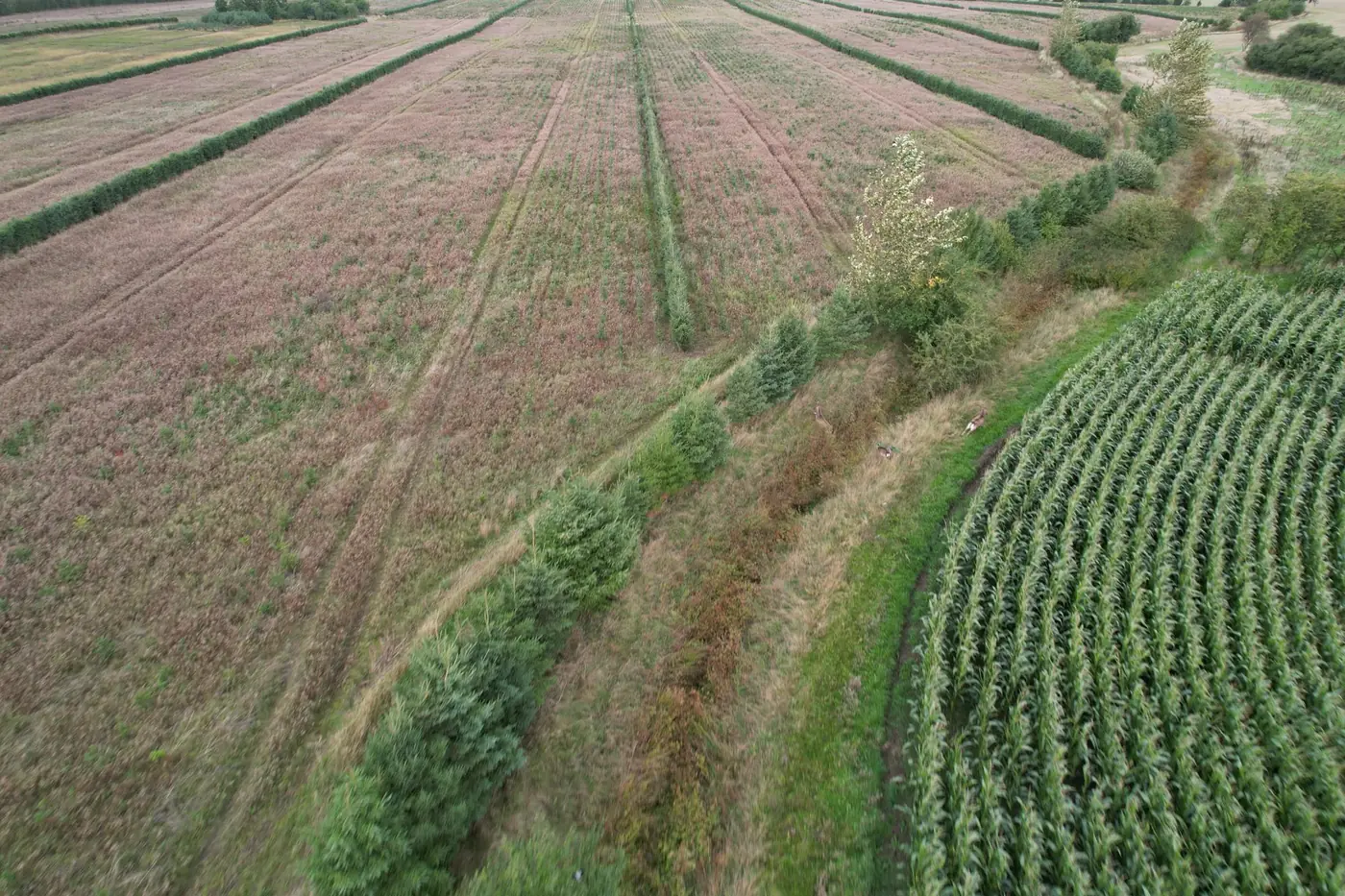
The map layer showing protected habitat types is indicative. Protection depends on the actual condition of the habitat. Comparing a drone photograph taken today with the map can show whether the recorded information is still accurate, but the final assessment rests with the municipality.
Frequently asked questions
How large must areas protected under § 3 be?
Lakes larger than 100 m². Heathland, bogs and fens, salt meadows, coastal marshes, freshwater meadows and dry grasslands forming a continuous area larger than 2,500 m², with special rules for bogs and fens beside lakes and watercourses.
Who administers § 3?
The municipality is the competent authority and can grant derogations.