
Lowland and wetland projects: from idea to construction
Updated
Taking carbon-rich lowland soils out of agricultural production is one of the largest tasks under the Green Tripartite (Grøn Trepart). The target is 140,000 hectares, including adjacent areas. Here is the process from idea to construction, and where documentation comes in.
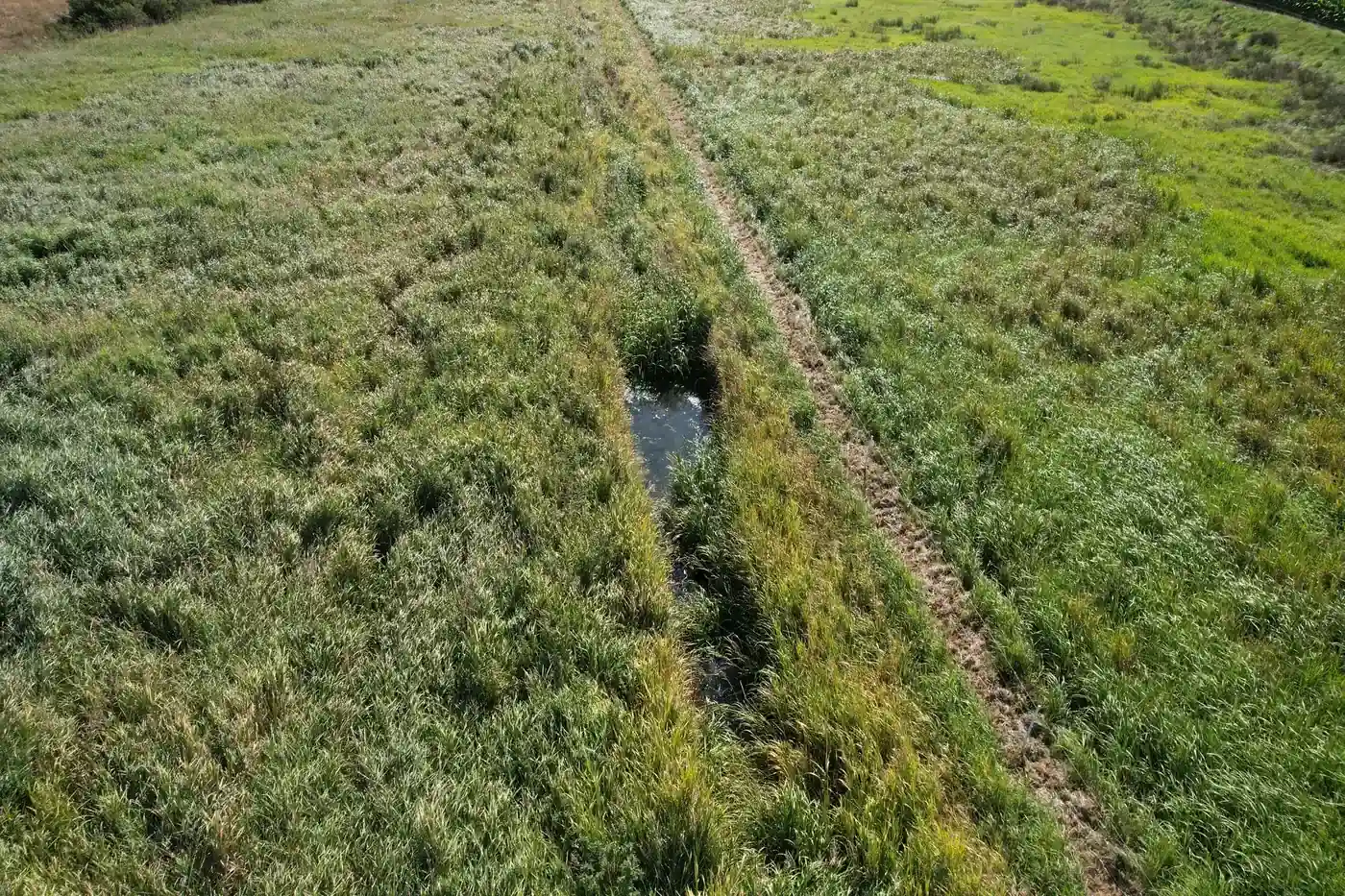
Why lowland projects?
According to Landbrugsstyrelsen (the Danish Agricultural Agency), the purpose of lowland projects is to reduce greenhouse gas emissions from carbon-rich lowland soils. The projects can also reduce nitrogen discharges into fjords and coastal waters. Rewetting can additionally increase the land's capacity to buffer large volumes of water and have a positive effect on biodiversity.
The VLP grant scheme
Vådområder og lavbundsprojekter (VLP, wetlands and lowland projects) is the joint scheme that continues Vand- og klimaprojekter (VKP, water and climate projects) and Klima-lavbundsprojekter (KLA, climate-focused lowland projects). It covers six types of intervention: nitrogen wetlands, lowland projects, phosphorus wetlands and river valley restoration under VKP, as well as nitrogen wetlands and lowland projects under KLA.
The main stages
- Idea and screening, typically in MARS.
- A feasibility study resulting in reports on land ownership and technical feasibility.
- Establishment under track 1 (EU-funded, VKP) or track 2 (nationally funded, KLA).
- Compensation for landowners and registration of an easement in the land register to ensure the project is maintained.
- Construction, payment and subsequent documentation requirements.
Who can apply?
Municipalities can apply for all six types of intervention. Naturstyrelsen (the Danish Nature Agency) can apply for three VKP interventions. Private landowners, national park foundations and foundations with charitable nature, environmental or climate objectives can apply for KLA lowland projects and KLA nitrogen wetlands.
Documentation before and after
Among other things, the feasibility study must identify effects and potential consequences. There are also documentation requirements after the project. Both become easier if the condition of the land is recorded early and in a repeatable way. A drone flight with fixed survey points for repeat monitoring, combined with orthophotography, an elevation model, § 3 registration (protected habitat registration under Danish law) and soil data, provides a baseline for later comparisons.
Frequently asked questions
Who can apply for grants for lowland projects?
Municipalities, Naturstyrelsen, private landowners and certain foundations, depending on the intervention. See Landbrugsstyrelsen's grant guide.
What is the difference between track 1 and track 2?
Track 1 covers EU-funded VKP establishment projects with application rounds. Track 2 covers nationally funded KLA projects with ongoing grant approvals on a first-come, first-served basis.
Sources
Terms in this article
Articles on this topic
- Grants for wetlands and low-lying land projects (VLP) 2026
- Feasibility studies for low-lying land and wetland projects
- Restoration of river valleys and watercourses: purpose and documentation
- Nitrogen removal wetlands: purpose, location and grants
- Phosphorus wetlands: when lakes are the focus
- Track 1 and track 2 in VLP: what is the difference?
- Land consolidation and replacement land in wetland and low-lying land projects
- The land ownership feasibility study: landowners first
- A landowner's route into a lowland soil or wetland project
- Changes and payments in VLP projects: deadlines and documentation